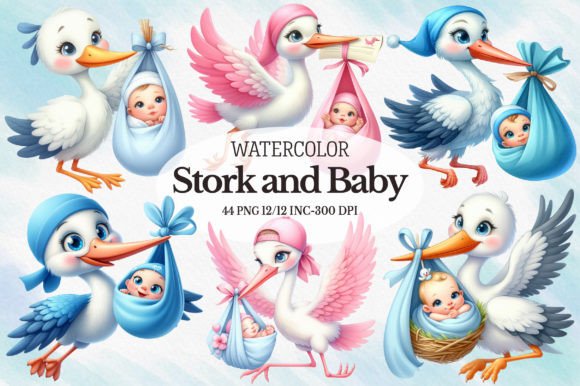
Evaluating Stork and Baby Sublimation Clipart for Creative Projects
Stork and baby sublimation clipart represents a specialized category of digital design assets tailored specifically for dye-sublimation printing. Unlike standard raster graphics intended for web use or basic document formatting, these files are engineered to withstand the color transformation process inherent in sublimation. When evaluating these assets for nursery decor, baby shower merchandise, or personalized gifts, it is essential to understand the technical specifications and aesthetic nuances that distinguish high-quality sublimation files from generic clipart. This evaluation ensures that the final printed product meets professional standards and client expectations.
Defining the Asset Class
At its core, stork and baby sublimation clipart consists of high-resolution digital illustrations featuring traditional newborn motifs. However, the defining characteristic is not merely the subject matter but the file architecture. True sublimation clipart is typically provided in PNG format with transparent backgrounds or as layered PSD files, maintaining a resolution of at least 300 DPI at the intended print size. The color profiles are often optimized for CMYK output, acknowledging that sublimation inks appear dull on paper before becoming vibrant upon heat transfer. Understanding this distinction prevents the common error of purchasing low-resolution web graphics that result in pixelated or color-shifted prints when applied to polyester substrates or polymer-coated hard blanks.
Primary Use Cases and Applications
The demand for this specific clipart niche stems from several distinct market segments. Crafters and small business owners frequently utilize these designs for:
- Baby Shower Signage: Creating cohesive themes across welcome signs, buffet labels, and photo booth props.
- Personalized Apparel: Designing onesies, bibs, and announcement shirts where the stork motif serves as a central focal point.
- Nursery Decor: Producing custom blankets, pillows, and wall hangings that require soft, pastel color palettes compatible with sublimation ink gamuts.
- Keepsake Items: Manufacturing ceramic ornaments, metal keychains, and slate plaques commemorating birth announcements.
In each scenario, the clipart acts as a foundational element that can be combined with typography and other design elements. The versatility of transparent PNGs allows for seamless integration into complex layouts without the need for advanced masking or background removal techniques.
Benefits of Specialized Sublimation Assets
Selecting clipart explicitly marketed for sublimation offers tangible advantages over adapting general-purpose vector art or stock photography. The primary benefit is color accuracy. Designers creating sublimation-specific assets account for the chemical reaction between gas-phase dyes and polymer fibers. They avoid neon colors that cannot be reproduced by CMYK sublimation inks and instead utilize tested palettes that yield predictable results after pressing. Additionally, these assets often feature clean edges and intentional negative space, facilitating easier placement on curved surfaces like mugs or tumblers where distortion can occur. The time saved in color correction and file preparation often justifies the initial investment in premium sublimation-ready libraries.
Tradeoffs and Technical Considerations
Despite their utility, stork and baby sublimation clipart presents specific limitations that buyers must weigh. The most significant tradeoff is substrate dependency. These designs only achieve permanence on polyester textiles or poly-coated items; they will wash out of cotton or fail to adhere to uncoated ceramics. Furthermore, the aesthetic style of sublimation clipart tends toward illustrative and whimsical rather than photorealistic. If a project requires photographic realism, alternative printing methods like direct-to-garment (DTG) or heat transfer vinyl (HTV) may be superior. Buyers should also consider licensing restrictions. Many sublimation clipart licenses permit physical end-product sales but prohibit digital redistribution or use in print-on-demand platforms where the file itself remains accessible. Careful review of terms is necessary to avoid intellectual property violations.
Situational Fit: When to Choose Sublimation Clipart
This asset class is a strong fit when production volume, durability, and full-color complexity align. Sublimation excels in scenarios requiring all-over prints or designs that must remain soft to the touch, such as infant clothing where vinyl layers could cause discomfort. It is also ideal for items subjected to frequent washing, as the dye becomes part of the fiber rather than sitting atop it. For creators building a cohesive brand identity around nursery themes, investing in a matching set of stork and baby sublimation clipart ensures visual consistency across diverse product lines. The ability to resize without quality loss (provided the source resolution is adequate) makes these assets particularly valuable for businesses offering customizable sizing options.
When Alternatives Are Preferable
Conversely, there are situations where stork and baby sublimation clipart may not be the optimal choice. For dark-colored garments, sublimation is inherently limited since the process relies on white or light bases to show true colors. In such cases, HTV or screen printing transfers utilizing opaque inks are more appropriate. Similarly, if the project involves natural fibers like 100% cotton muslin swaddles, sublimation clipart cannot be used directly without a poly-spray pretreatment that alters fabric hand-feel. For one-off projects requiring metallic or glitter effects, specialty vinyl or foil transfers offer finishes that sublimation inks cannot replicate. Evaluators should match the medium to the material constraints before committing to sublimation assets.
Decision-Making Framework for Buyers
To determine whether a specific stork and baby sublimation clipart collection aligns with project goals, consider the following practical criteria during evaluation:
- Resolution Verification: Confirm actual pixel dimensions, not just listed DPI. A 300 DPI image that is only 2 inches wide is insufficient for blanket printing.
- Color Profile Compatibility: Test sample prints with your specific printer and ink combination. Colors vary significantly between Epson, Sawgrass, and Artisan systems.
- Style Cohesion: Assess whether the illustration style matches existing branding or complementary assets. Mixing flat vector storks with watercolor baby elements can create visual discord.
- Licensing Scope: Verify commercial usage rights match your business model, especially regarding bundle creation or digital template sales.
- Editability: Determine if layered files are needed for customization. Flattened PNGs limit modification potential compared to PSD or AI source files.
By systematically applying these evaluation points, creators can select stork and baby sublimation clipart that enhances rather than hinders production workflows. The goal is to secure assets that bridge creative vision with technical feasibility, ensuring that the sentimental value of baby-themed products is matched by professional execution and lasting quality. Ultimately, successful utilization depends less on the novelty of the design and more on the alignment between file specifications, printing capabilities, and end-use requirements.