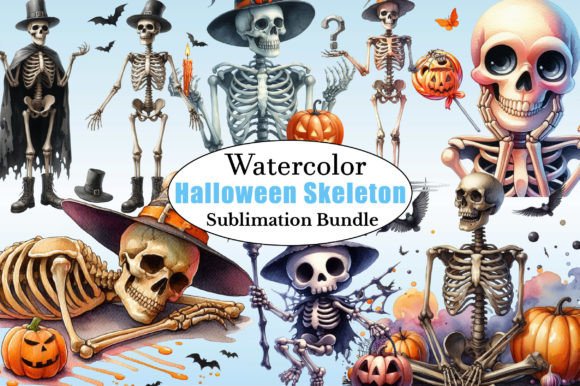
Watercolor Halloween Skeleton Clipart: Creative Uses
The intersection of macabre imagery and soft, fluid artistry creates a unique visual tension that defines modern autumnal design. Watercolor Halloween skeleton clipart has emerged as a staple for creators who want to celebrate the spooky season without resorting to aggressive gore or childish cartoons. This specific niche of digital illustration combines the organic, unpredictable nature of watercolor paint with the structured symbolism of skeletal anatomy. For designers, educators, and small business owners, these assets offer a versatile middle ground that feels both nostalgic and contemporary.
Unlike vector graphics which rely on mathematical precision, watercolor clipart retains the texture of cold-press paper, pigment blooms, and brush strokes. This inherent imperfection is exactly what makes it valuable in an era of polished digital perfection. When you incorporate a hand-painted skull or dancing femur into a project, you are introducing a tactile quality that suggests human craftsmanship. Understanding how to leverage this aesthetic requires looking beyond simple decoration and considering how these elements function within a broader design system.
Defining the Aesthetic Appeal
Watercolor Halloween skeleton clipart distinguishes itself through emotional resonance. Traditional horror iconography often aims to shock or frighten, utilizing sharp lines and high-contrast colors. In contrast, the watercolor interpretation softens the subject matter. The translucency of the medium allows for layering, creating depth that mimics the fragility of bone and the ethereal nature of spirits. This style appeals to adult audiences who appreciate the gothic romanticism of the holiday rather than just the scare factor.
From a technical perspective, high-quality versions of this clipart should maintain the integrity of the original painting. Look for files that preserve the rough edges of pigment pooling and the subtle gradients of wet-on-wet techniques. These details prevent the artwork from looking like a flat digital filter applied over a standard line drawing. The best assets feel like they were lifted directly from an artist’s sketchbook, complete with the charming irregularities that signal authenticity to your audience.
Applications for Print and Physical Products
For entrepreneurs and makers, this clipart category serves as a foundation for seasonal product lines. The organic texture of watercolor translates exceptionally well to physical substrates. When designing for print, the slight graininess of the artwork helps mask the limitations of home printers or commercial presses, resulting in a richer final output than crisp digital vectors might achieve on uncoated paper.
- Stationery Suites: Use isolated skeletal hands holding floral arrangements as corner anchors for wedding invitations or autumn event stationery. The juxtaposition of bones and botanicals creates a sophisticated "memento mori" theme suitable for mature gatherings.
- Textile Design: Sublimation printing on fabrics benefits from watercolor aesthetics because the ink naturally bleeds into fibers, mimicking the original painted effect. Skeleton motifs work well on tote bags, tea towels, and apparel where a distressed, vintage look is desired.
- Packaging and Labels: Small businesses selling candles, soaps, or baked goods can use minimalist bone illustrations as logo accents. The softness of the art style aligns well with artisanal branding, suggesting natural ingredients and handmade care even when the imagery is anatomical.
Educational and Instructional Adaptations
Educators and homeschoolers frequently seek resources that are accurate yet approachable. Realistic anatomical diagrams can be intimidating for younger students or casual learners, while cartoon skeletons lack educational value. Watercolor Halloween skeleton clipart bridges this gap effectively. The artistic rendering captures attention through beauty, making anatomy lessons regarding bone structure, joints, and symmetry more engaging.
When adapting these assets for learning materials, focus on clarity. Choose illustrations where the bone structure is distinct despite the painterly style. You might pair a watercolor femur with clean, sans-serif typography to label parts, creating a balance between artistic expression and factual accuracy. This approach works particularly well for biology worksheets, museum guides, or nature journaling prompts where the goal is to inspire curiosity about the natural world alongside seasonal festivities.
Digital Design and Content Creation
In the digital space, texture is often lost. Screens tend to flatten images, making everything appear uniform. Integrating watercolor skeleton elements into social media templates, blog headers, or website banners reintroduces necessary visual weight. For content creators, these assets act as pattern interrupts. A feed dominated by bold neon graphics and solid blocks of color will pause at a muted, textured watercolor image because it offers visual rest.
Consistency is key when building a seasonal brand identity online. If you choose a specific watercolor skeleton set, ensure the color palette and brushwork style remain uniform across all platforms. Mixing disparate art styles can make a brand look disjointed. Create a mood board that pairs your chosen clipart with complementary textures, such as aged parchment backgrounds, serif fonts, and muted earth tones. This cohesive styling signals professionalism and intentionality to your followers, elevating the content above generic holiday posts.
Technical Considerations for Best Results
To maximize the utility of watercolor Halloween skeleton clipart, proper file management is essential. Always prioritize PNG files with transparent backgrounds over JPEGs. White backgrounds on watercolor art are rarely pure white; they usually contain paper texture or scanning artifacts that become obvious when placed over colored layouts. Transparent PNGs allow the artwork to blend seamlessly with any background color or texture you choose.
Resolution matters significantly. Watercolor relies on fine detail to convey its medium. Using low-resolution files results in pixelation that destroys the illusion of paint. Ensure your source files are at least 300 DPI at the intended print size. For digital use, having oversized originals allows you to crop and reframe compositions without losing quality. Additionally, consider organizing your asset library by pose, expression, or color temperature. Spending time categorizing files upfront saves hours of searching during active design sessions, keeping your creative flow uninterrupted.
Balancing Theme and Audience Sensitivity
While skeletons are generally accepted symbols of Halloween, context dictates reception. The versatility of watercolor allows you to modulate the tone of your project. A skeleton depicted with warm sepia tones and surrounded by marigolds reads as celebratory and ancestral, appropriate for Day of the Dead content or cultural appreciation projects. Conversely, cool blues and greys with stark, bare branches evoke a quieter, more melancholic autumn atmosphere.
Always consider your specific demographic. For family-oriented brands, select poses that are whimsical or static rather than aggressive. For niche gothic or alternative markets, you can embrace darker washes and more complex anatomical accuracy. The strength of this clipart style lies in its adaptability; the same basic asset can serve vastly different communicative purposes depending on color grading, accompanying typography, and layout choices. By treating these illustrations as flexible design components rather than fixed decorations, you unlock their full potential across diverse projects.
Curating Original Compositions
Avoid the trap of simply dropping pre-made clusters onto a canvas. The most effective designs treat individual watercolor skeleton elements as raw materials for new compositions. Separate the arms, legs, and skulls if possible, or mask out sections to create custom arrangements. Layer multiple elements with varying opacity to simulate the depth of real watercolor glazing. Add digital splatters or washes that match the source material to extend the artwork beyond its original borders.
This active manipulation transforms stock assets into bespoke design elements. It demonstrates a level of creative investment that resonates with audiences tired of recognizable template art. Whether you are designing a book cover, a classroom poster, or a limited-edition sticker sheet, the effort to customize and integrate watercolor Halloween skeleton clipart thoughtfully yields results that are both commercially viable and artistically satisfying. The goal is not just to fill space with seasonal imagery, but to communicate a specific feeling through the deliberate application of texture, form, and symbolic history.