Cow Skull Cactus SVG and Cow Skull Desert: A Practical Guide to Quality Western Design Assets
The intersection of rustic Americana and botanical illustration has created a sustained demand for specific design elements, most notably the Cow Skull Cactus SVG and broader Cow Skull Desert aesthetics. For creators ranging from Etsy shop owners to freelance graphic designers, these motifs represent more than just decoration; they are cultural signifiers that evoke the Southwest, boho-chic fashion, and vintage ranch life. However, the popularity of this niche has flooded marketplaces with inconsistent quality. Understanding the technical and artistic nuances of these files is essential for producing professional merchandise, signage, or digital content that stands out rather than blending into a sea of generic clip art.
Defining the Aesthetic and Its Applications
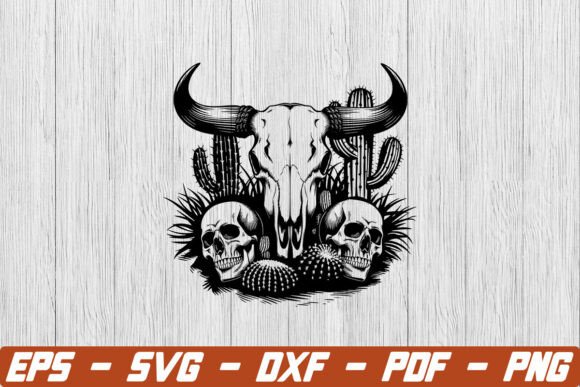
When we discuss a Cow Skull Cactus SVG, we are referring to a scalable vector graphic that combines two distinct iconographic elements: the bleached bone structure of livestock and the organic, often spiny form of desert flora like prickly pears or agave. This combination softens the macabre nature of the skull while adding an edge to the plant life. The Cow Skull Desert theme expands this to include landscapes, sunsets, typography, and additional fauna like roadrunners or rattlesnakes.
These assets are primarily used in laser cutting, vinyl decals, sublimation printing, and web design. Their appeal lies in their versatility. A well-executed vector can be resized from a one-inch earring charm to a six-foot shop sign without losing fidelity. For entrepreneurs, this scalability is cost-effective, allowing a single design purchase to serve multiple product lines. However, this utility depends entirely on the file’s construction, which is where many users encounter avoidable friction.
Technical Pitfalls in Vector Selection
The most frequent mistake beginners and intermediate users make is assuming that any file labeled "SVG" is truly a functional vector. Many listings for Cow Skull Cactus SVG designs are actually raster images (JPEGs or PNGs) merely saved with an .svg extension. When imported into software like Cricut Design Space, Silhouette Studio, or Adobe Illustrator, these fake vectors fail to separate into layers. You cannot change individual colors, and the cut lines become jagged pixel traces rather than smooth mathematical paths.
This error directly impacts production efficiency and material waste. If you attempt to cut a faux-vector on adhesive vinyl, the machine may interpret internal shading as cut lines, ruining the decal. To avoid this, always verify the file type before purchasing or downloading. Open the file in a true vector editor. Genuine vectors will display anchor points and bezier curves when selected. If the image selects as a single flat box or shows pixels when zoomed in at 800%, it is not a usable vector for fabrication.
Anatomy and Proportion Errors
Beyond file format, artistic accuracy is a common failure point in Cow Skull Desert designs. In the rush to create trendy graphics, some designers sacrifice anatomical correctness for stylization. While stylization is valid, poor execution looks amateurish. Common issues include asymmetrical eye sockets, incorrect horn curvature, or cacti that defy botanical logic. For example, a prickly pear cactus should have distinct pad segmentation, yet many low-quality SVGs render them as amorphous green blobs.
For professionals selling finished goods, these details matter. Customers familiar with Western culture or botany will notice inaccuracies, which can diminish perceived value. Before committing to a design asset, compare it against reference photography. Look for balanced symmetry in the skull and natural growth patterns in the flora. High-quality assets strike a balance between artistic flair and respectful representation of the subject matter.
Licensing Misunderstandings and Commercial Risk
A critical oversight involves licensing terms. Many users download a Cow Skull Cactus SVG believing that possession equals ownership. This is rarely the case. Most digital design assets come with restricted licenses. A personal license typically prohibits selling physical items made with the file, while a commercial license may cap the number of units you can produce. Some designers explicitly prohibit using their work for print-on-demand services or mass manufacturing.
Ignoring these terms exposes small business owners to legal risk and platform bans. Marketplaces like Etsy and Amazon actively enforce intellectual property rights. Getting flagged for copyright infringement can result in account suspension, loss of revenue, and reputational damage. Always read the license agreement included in the download zip file. If the terms are unclear, contact the creator directly for clarification. Investing in a proper commercial license is a negligible cost compared to the expense of rebranding after a cease-and-desist order.
Optimizing Files for Specific Fabrication Methods
Even a perfect vector file may require modification depending on your output method. A Cow Skull Cactus SVG optimized for screen printing differs significantly from one intended for laser engraving. Screen prints require color separation and trapping, while laser cutters need simplified paths and minimal nodes to prevent burning or stalling.
- For Vinyl Cutting: Ensure the design has no overlapping paths. Use the "weld" or "unite" function to merge shapes into a single continuous cut line. Intricate details smaller than 1/8 inch often fail to weed properly; simplify these areas before cutting.
- For Laser Engraving: Convert all text to outlines to prevent font substitution errors. Check for open paths that could cause the laser head to travel unnecessarily. Rasterize complex gradients if your laser does not support vector dithering.
- For Sublimation: Verify the color profile. Vectors created in CMYK may shift unexpectedly when converted to RGB for sublimation printers. Test print a swatch to ensure the desert tones match your expectations.
Neglecting this optimization step leads to wasted time and materials. Taking ten minutes to clean up nodes and adjust stroke widths can save hours of troubleshooting during production.
Evaluating Source Credibility and Quality
Where you acquire your Cow Skull Desert assets influences both quality and safety. Free download sites often host stolen or corrupted files. While budget constraints are real, the hidden costs of free assets—malware risks, poor resolution, and lack of support—often outweigh the savings. Reputable marketplaces and independent designer shops provide verified files, clear licensing, and customer support.
When evaluating a source, look for transparency. Trustworthy sellers provide preview images showing the design in context, detailed file specifications, and responsive communication channels. Read reviews specifically mentioning file usability, not just aesthetic appeal. A five-star review saying "cute design" is less valuable than a three-star review noting "missing layers in SVG." Prioritize creators who demonstrate expertise in both design and fabrication, as they understand the practical requirements of their audience.
Making Informed Design Decisions
Ultimately, success with Cow Skull Cactus SVG and Cow Skull Desert themes requires moving beyond passive consumption to active evaluation. Treat digital assets as raw materials that require inspection, testing, and refinement. By verifying vector integrity, respecting licensing, ensuring anatomical and botanical plausibility, and optimizing for your specific equipment, you transform generic downloads into distinctive, professional-grade creations. This disciplined approach not only improves your immediate results but also builds a sustainable foundation for your creative or business endeavors, ensuring that your Western-inspired projects resonate with authenticity and quality.